
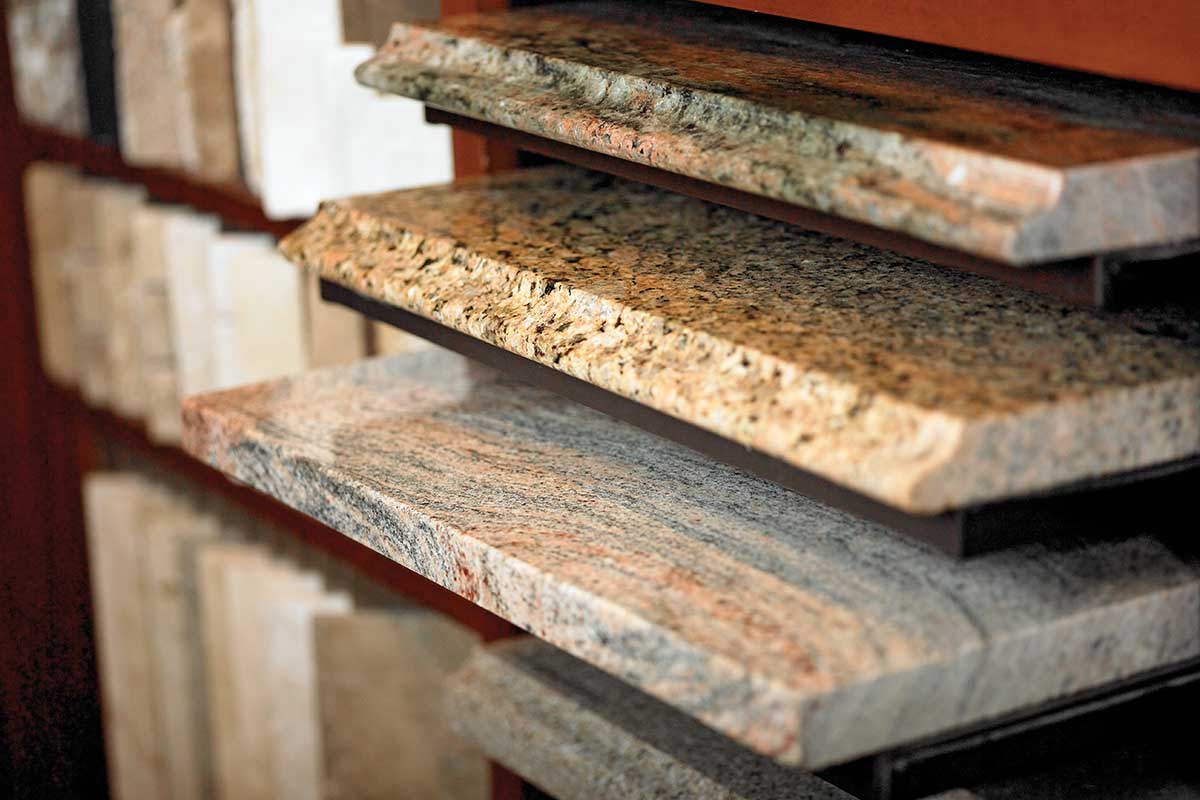
For many people, the kitchen is the heart of a home. Aside from being functionally essential (it’s where your family is fed!), the kitchen can also be a place where precious memories are made, whether that’s through a family dinner, a holiday baking project, or a romantic at-home date night.
When you spend so much time in a room, it’s important for that place to fit your needs and fit your style. Designing your dream kitchen is an exciting part of the homebuilding process—from the appliances and the cabinets to the flooring, the backsplash and, of course, the countertops. But we understand that it also involves a lot of choices!
That’s why we’ve created a helpful guide on how to select your ideal kitchen countertops, including the factors to consider and the differences between materials.
If you’re ready to get cooking, read on!
Factors to consider when choosing kitchen countertop materials
The two biggest factors when it comes to selecting the perfect countertops are durability and style. You want something that can withstand years of prepping, cooking, and entertaining while also matching the rest of your home’s aesthetics.
When selecting your kitchen countertops, you’ll be deciding on material, style, and color, but there are several different factors to take into account before making those selections.
Questions to ask yourself
- Are you looking for something low-maintenance, or are you okay with a material that requires regular sealing?
- Do you need something durable that’s resistant to heat, stains, and scratches?
- Do you prefer a material that has a consistent appearance, or do you want countertops that have some variation?
- What will your backsplash, flooring, cabinets, hardware, and appliances look like?
- The best kitchen countertop materials blend aesthetics, durability, and ease of care—so there’s no compromising when it comes to your kitchen. That’s where four of our go-to options come in: quartz, Silestone®, quartzite, and granite.
Quartz: a modern approach to kitchen countertops
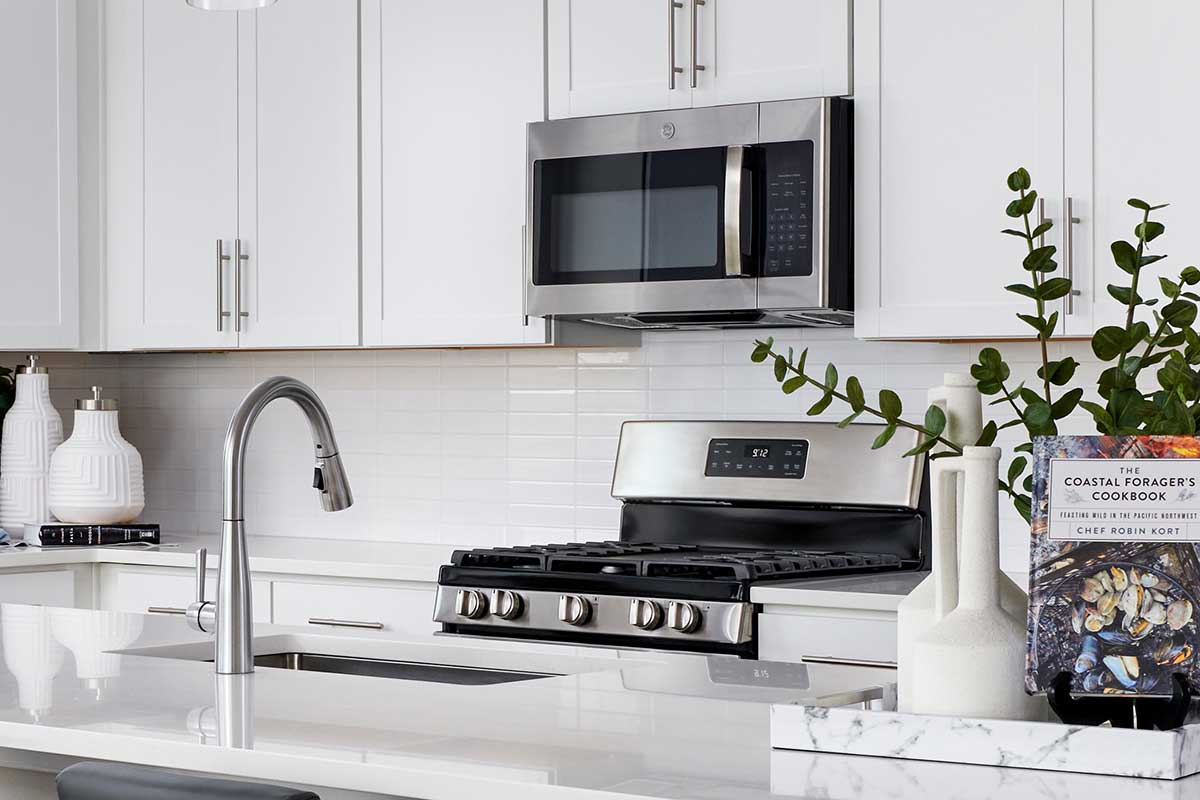
Quartz continues to be a popular choice for today’s homebuyers, offering a refined look, impressive durability, and low-maintenance appeal that suits a variety of lifestyles.
What is quartz?
Quartz countertops are engineered stone surfaces made from crushed natural quartz combined with resins and pigments. This process creates a non-porous, highly durable material with a consistent, polished appearance.
Benefits of quartz countertops
- Low maintenance: Quartz does not require sealing, making it easy to care for in the long run
- Non-porous surface: Resists stains, moisture, and bacteria—ideal for busy kitchens
- Consistent appearance: Uniform color and pattern help create a clean, cohesive look
- Durability: Highly resistant to scratches and everyday wear
Considerations to keep in mind
While exceptionally durable, quartz is less heat-resistant than natural stone. For that reason, using trivets or hot pads on quartz countertops is best. In addition, if you’re someone who wants your kitchen countertops to have a bit of organic variation, you may find that natural stone countertops are a better fit.
Silestone: elevated quartz surfaces
For those looking to combine quartz performance with a more design-forward finish, Silestone offers a premium option with added style and innovation.
What is Silestone?
Silestone is a premium type of quartz created by Cosentino. It offers the same benefits as standard quartz, with expanded color options and refined finishes. It’s a material many homeowners are pleased to discover as they navigate their countertop options.
Benefits of Silestone countertops
- All the advantages of quartz: Non-porous, durable, and easy to maintain
- Wide design range: Available in a broad spectrum of colors and textures
- Contemporary appeal: Ideal for modern and transitional kitchen designs
- Innovative features: Select options include antimicrobial protection
Considerations to keep in mind
As you might expect, Silestone is a higher-tier option that can come with a higher price tag. With the many benefits Silestone countertops offer, however, homeowners tend to find them well worth the investment.
Quartzite: natural beauty
For those who love the look of natural stone but want enhanced durability, quartzite offers a compelling balance of elegance and performance.
What is quartzite?
Quartzite is a natural stone that begins as sandstone and transforms under heat and pressure into a dense, durable material. The result is a surface with the organic beauty of stone—often resembling marble—with greater strength and resilience.
Benefits of quartzite countertops
- Natural variation: Showcases unique veining and soft movement for an elevated, one-of-a-kind look
- Impressive durability: Harder than many natural stones, making it well-suited for everyday use
- Heat resistance: Holds up well to hot pots and pans
- Timeless appeal: Offers a classic aesthetic that complements a variety of design styles
Considerations to keep in mind
Because it’s a natural stone, quartzite is porous and requires periodic sealing to help protect it against staining. Sealing should generally happen every one to three years, depending on the porosity of the slab. Its natural variation also means that selecting the right slab is an important part of the process, ensuring the finished look aligns with your vision.
Granite: timeless natural beauty
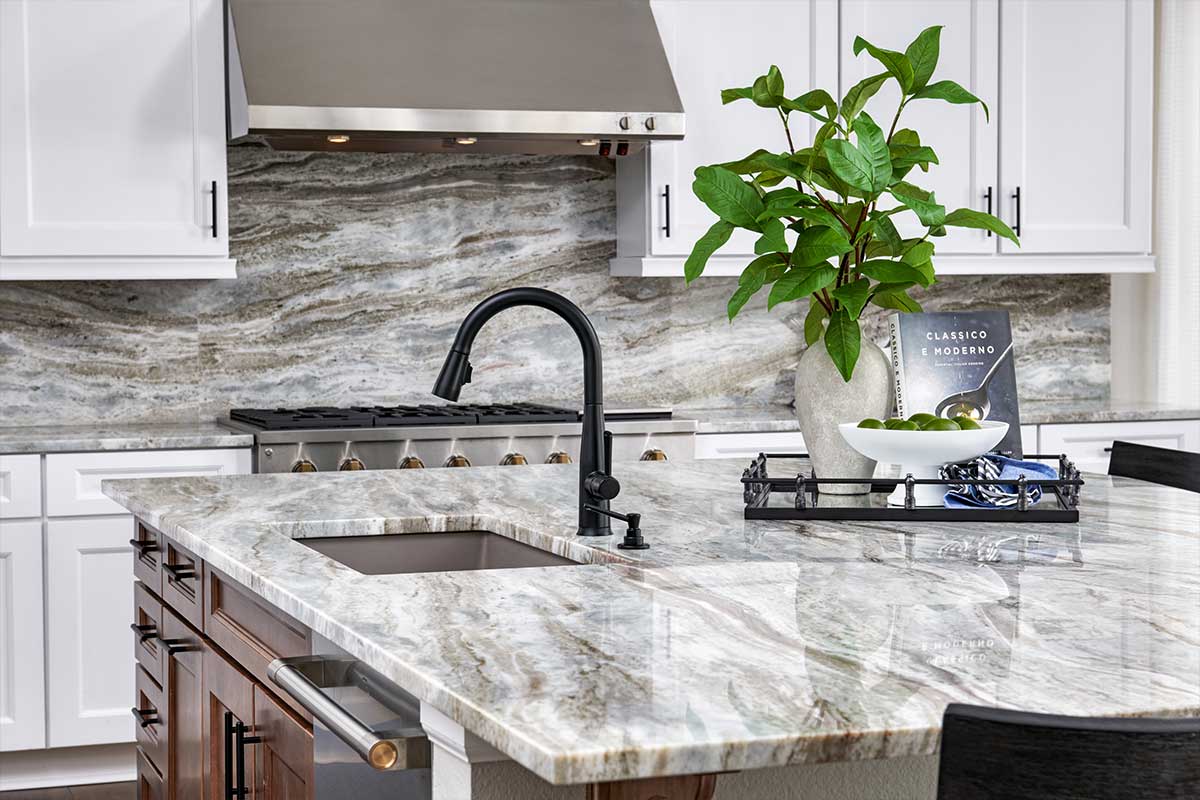
Granite brings a sense of depth and character to a kitchen, making it a lasting choice for those who appreciate natural materials and distinctive design.
What is granite?
Granite is a natural stone that is quarried from the earth and cut into slabs. Each piece is unique, showcasing natural veining, movement, and color variations that create a one-of-a-kind look.
Benefits of granite countertops
- Distinctive appearance: Natural variation ensures your kitchen feels truly unique
- Heat resistance: Performs beautifully when exposed to high temperatures
- Durability: A long-lasting material suited to everyday use
- Enduring appeal: Often associated with elevated design and long-term value
Considerations to keep in mind
Like other natural stones, granite is porous. It needs periodic sealing to protect it from stains and excess water exposure. Again, that’s usually every one to three years. Moreover, since granite comes with its own natural variation, you need to select slabs thoughtfully to achieve the desired look.
Comparing kitchen countertop materials
The right countertop material ultimately depends on your lifestyle, design preferences, and how you use your kitchen every day.
- For a low-maintenance lifestyle: Quartz and Silestone offer ease of care and lasting beauty
- For timeless, natural character: Quartzite and granite provide depth, individuality, and classic appeal
- For a refined, design-forward look: Silestone delivers elevated style with modern versatility
No matter which material you choose, your countertops play an essential role in shaping the look and feel of your kitchen. With thoughtful selection, you can create a space that is as functional as it is beautiful—one that supports everything from everyday meals to life’s most memorable moments.
Designing a cohesive kitchen around your countertops
While selecting the right kitchen countertop material is an important step, it’s only part of the picture. The most inviting kitchens feel thoughtfully composed, where each element works together to create a balanced, polished look.
Pairing countertops with cabinetry
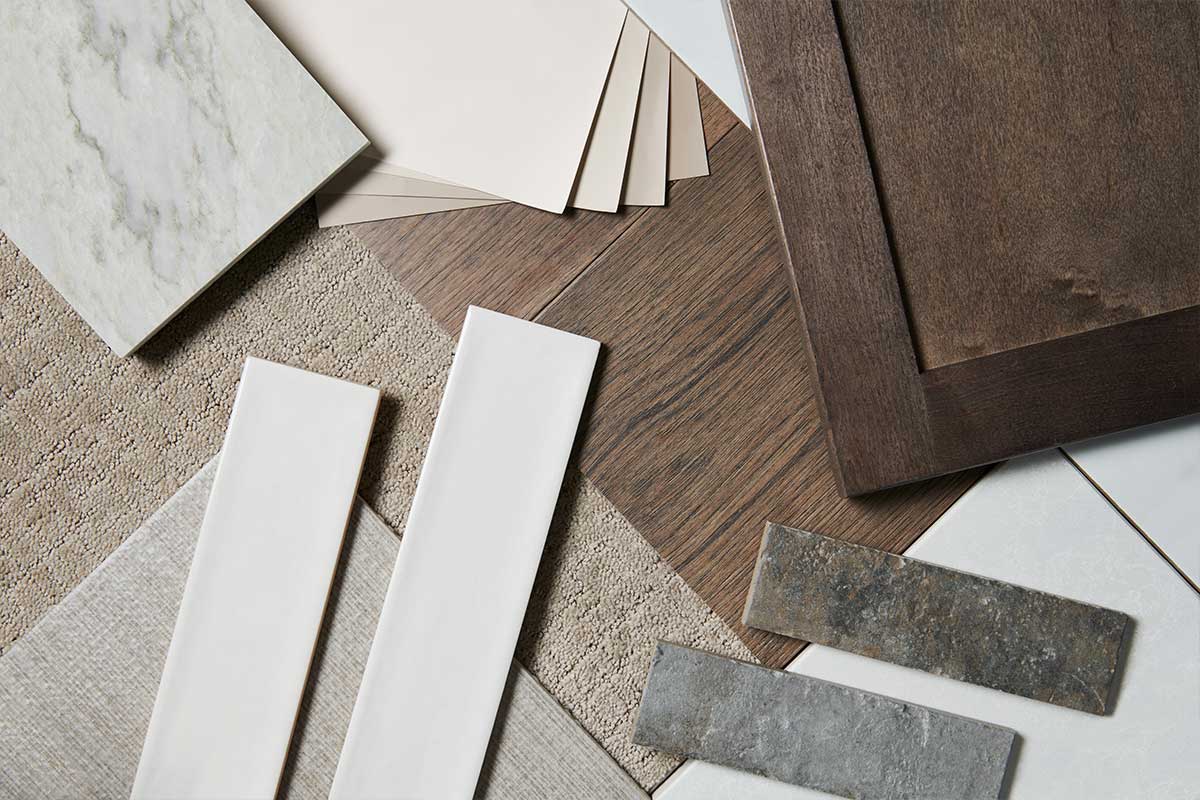
Your countertops and cabinetry set the visual foundation of your kitchen, so it’s important to think about how they complement one another. Pairing light countertops with darker cabinets—or vice versa—can introduce depth, especially in open-concept designs where subtle contrast helps define the space. For a more understated look, opting for shades within the same color family creates a seamless and refined feel.
Don’t forget to consider undertones. Warm wood cabinetry pairs beautifully with soft whites, creamy neutrals, and finishes with yellow or beige undertones. Cooler grays and crisp whites, on the other hand, have blue undertones, giving them a clean and contemporary aesthetic. Paying attention to whether your selections lean warm or cool helps ensure your countertops and cabinetry feel cohesive rather than mismatched.
Backsplashes and finishing touches
Your backsplash, hardware, and fixtures offer the opportunity to tie the entire kitchen together. These elements act as a visual bridge, helping countertops and cabinetry feel cohesive rather than separate. A simple, understated backsplash can let a richly veined countertop take center stage, while a more textured or patterned tile can bring dimension to a sleek, streamlined surface. Thoughtfully chosen, quality finishes—such as brushed nickel, matte black, or warm brass—add another layer of cohesion, reinforcing your overall design direction.
Creating a space that feels uniquely yours
A beautifully designed kitchen isn’t about matching every detail perfectly—it’s about achieving a sense of harmony. Mixing materials, textures, and finishes with intention allows your space to feel layered, welcoming, and personal. Start with a clear design direction, be it classic, transitional, or modern, and then let it guide your selections for an overall cohesive look. (Gathering some interior design inspiration always helps, too.)
Need ideas for your future home? Check out our dream kitchens board on Pinterest!

Curious about the homebuilding journey?
Learn what to expect from contract to closing and beyond!
Silestone is a registered trademark of Cosentino Global, S.L.U.
Additional natural stone resources: https://www.naturalstoneinstitute.org/stoneprofessionals/varieties/